

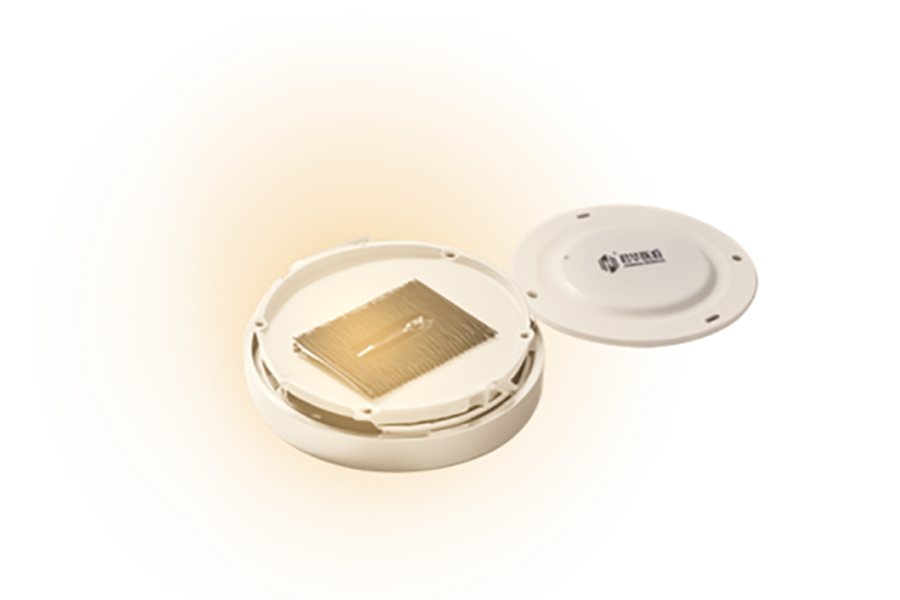
Driven by the dual innovation of neural decoding technologies and bioelectronic integration, brain–computer interface (BCI) technology has broken through the physical boundaries of traditional human–machine interaction. By establishing a dynamic closed-loop connection between the cerebral cortex and digital systems, BCI has achieved breakthrough progress in clinical applications such as motor function reconstruction and the diagnosis and treatment of disorders of consciousness. This marks humanity’s transition from physical enhancement toward a new era of true bio-intelligence integration.
In this rapidly evolving field, Junhua leverages its deep expertise in AKSOPEEK implant-grade PEEK materials to inject new momentum into the development of BCI technologies, continuously driving innovation and technological advancement.
Brain–Computer Interface Technology: Ushering in a New Era of Human–Machine Interaction
A Brain–Computer Interface (BCI), also known as brain–machine interaction, is a novel real-time communication and control system established between the biological brain and external devices or environments. It enables direct interaction between the brain and external systems, allowing users to control specialized computing devices through neural signals alone.
In recent years, BCI technology has made significant progress. From early non-invasive BCIs to today’s semi-invasive and invasive BCIs, electrodes are increasingly implanted directly into the cerebral cortex, greatly improving signal accuracy and reliability. However, major challenges remain—chief among them is how to maintain high-quality signal acquisition while minimizing damage to brain tissue.
Against this backdrop, Junhua draws on its strengths in PEEK material applications to provide critical support for the development of bio-hybrid neural brain–computer interfaces, helping improve patient quality of life, expand modes of human–machine interaction, and create greater value for society.
AKSOPEEK: A Pioneer in Medical-Grade PEEK Materials
AKSOPEEK offers a combination of outstanding properties that make it an ideal implant-grade material for medical applications.
Biocompatibility
AKSOPEEK has passed multiple biological evaluations. It is non-toxic, non-cytotoxic, non-mutagenic, non-carcinogenic, and non-allergenic, significantly reducing the risk of rejection and postoperative complications. It exhibits excellent compatibility with human tissues.
Lightweight Performance
Compared with traditional metal implant materials, AKSOPEEK delivers a higher strength-to-weight ratio, lower weight, and superior adaptability.
Excellent Mechanical Properties
With an elastic modulus similar to that of human bone, AKSOPEEK offers high strength, rigidity, fatigue resistance, and creep resistance, providing reliable structural support and protection for internal circuits and components while effectively resisting external impact and pressure.
Chemical Resistance
At room temperature, AKSOPEEK is resistant to most solvents except strong acids, strong alkalis, and highly oxidative solutions. It is hydrolysis-resistant and maintains long-term performance stability in complex physiological environments, extending the service life of implanted devices.
Thermal and Moisture Resistance
AKSOPEEK maintains mechanical and chemical stability at elevated temperatures and can withstand high-temperature sterilization. Its low thermal conductivity enhances post-implant comfort while ensuring safety and reliability in various environments.
Radiolucency
AKSOPEEK is X-ray transparent and radiation resistant, producing no imaging artifacts during CT scans or MRI examinations. This allows physicians to clearly monitor surrounding tissues postoperatively and identify potential issues in a timely manner.
Machinability and Customization
AKSOPEEK can be precisely machined and customized according to patient-specific requirements, enabling better adaptation to diverse anatomical structures and surgical needs, and improving implantation accuracy and fit.
Electrical Properties
Pure AKSOPEEK offers excellent electrical insulation, effectively protecting both the device and the human body while ensuring accurate and stable signal transmission.
Empowering the Future of Brain–Computer Interfaces
Design Freedom
Compared with traditional metal implant materials, AKSOPEEK offers higher specific strength, superior plasticity, and greater adaptability. Its material advantages and customization capabilities make it an ideal choice for housing and protecting BCI components, providing greater implantation space and design flexibility to support widespread BCI applications in medical and rehabilitation fields.
Safety and Long-Term Stability
The excellent properties of PEEK provide robust protection for BCI devices. Its bone-like elastic modulus reduces implantation damage risks and minimizes compression or injury to surrounding brain tissue. Superior biocompatibility helps reduce inflammatory responses, ensuring long-term safety, stability, and reliable operation of implanted BCI systems.
Integration and Innovation
By combining Junhua’s expertise in implant-grade PEEK materials with advanced BCI technologies, deeper integration and innovation become possible. This collaboration opens the door to the development of safer, more efficient, and more precise BCI products, such as PEEK-based electrodes or sensors, and optimized implantation and fixation solutions.
In the medical field, BCI technology offers new hope for patients with paralysis and neurological disorders. For example, paralyzed patients can use BCIs to control robotic limbs through neural signals, significantly enhancing independence and quality of life.
Looking Ahead
As brain–computer interface technologies continue to advance, AKSOPEEK materials are expected to see broader adoption within the BCI sector, making even greater contributions to human health and technological progress.